The Vanderbilt family was once one of the richest families in America if not the richest Their fortune began with Cornelius Vanderbilt, known as “The Commodore”. He started with almost nothing and built a shipping and railroad empire in the 1800s. When he died in 1877, his wealth was estimated to be about 100 million dollars. In today’s terms, that’s roughly 180 to 200 billion dollars which puts him firmly in the “richest people to ever live” category. His son, William Henry Vanderbilt, actually grew the fortune even larger. By the 1880s, the family was worth more than 200 million dollars… or hundreds of billions in today’s money!
Like many in the gilded age, they felt the need to show that wealth in the most visible way possible: enormous homes.
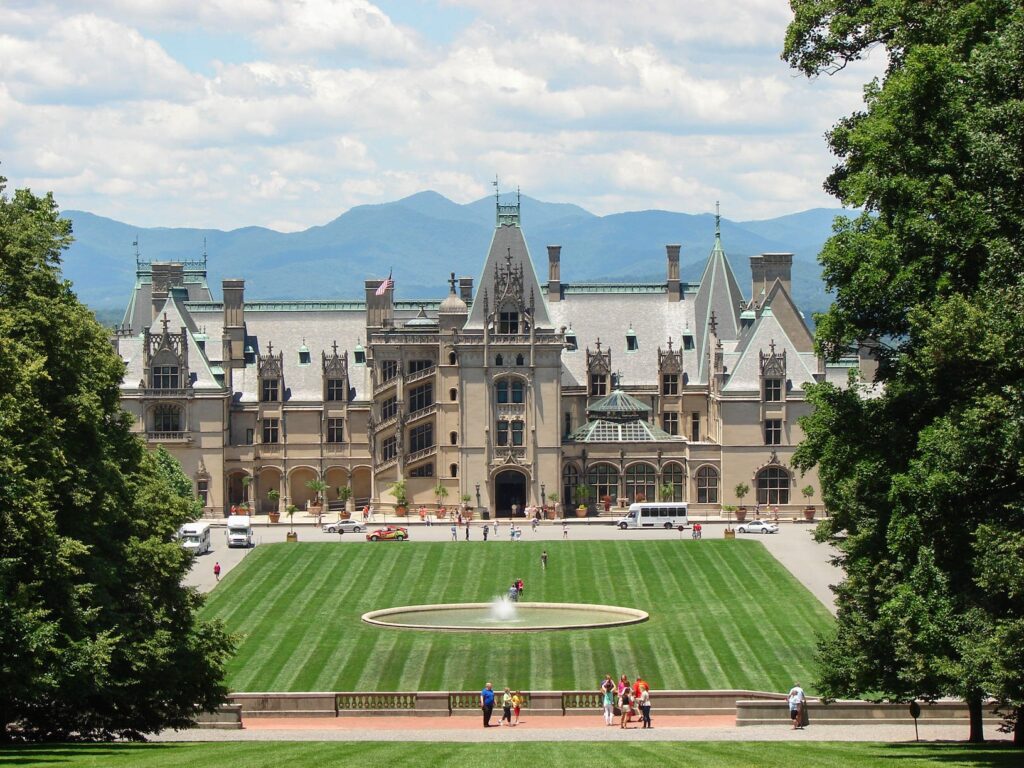
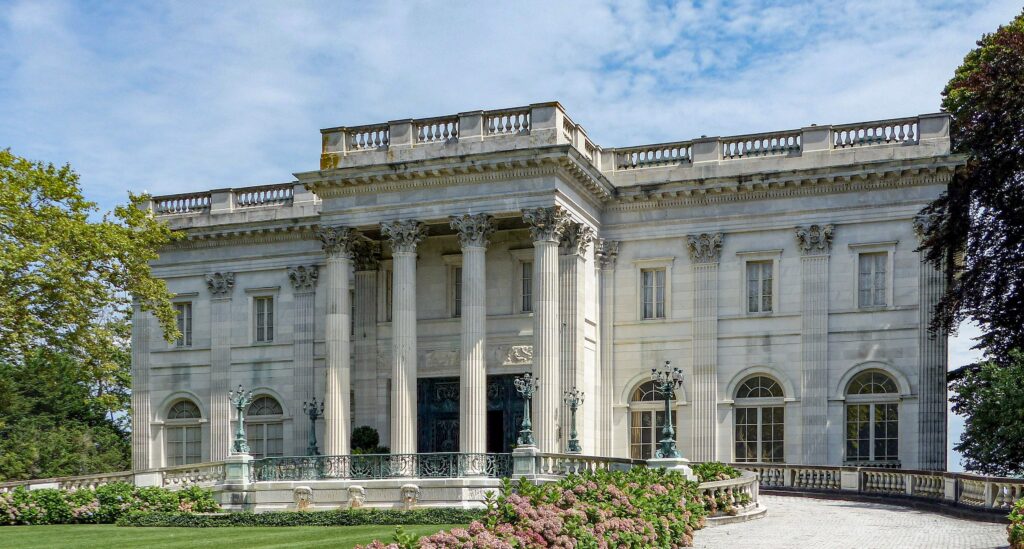
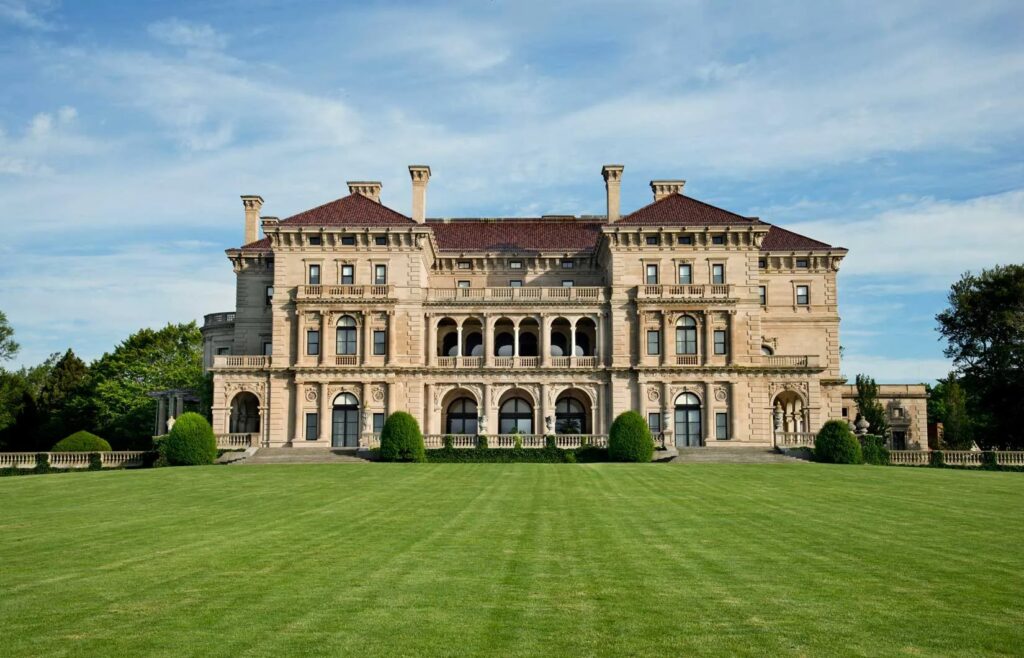
The most famous is the Biltmore Estate in North Carolina. Built in the 1890s, it is still the largest private home ever constructed in the United States. The house alone is about 179,000 square feet and has 250 rooms. It was originally surrounded by roughly 125,000 acres of land. Biltmore They built many others like The Breakers and Marble House in Newport as well as multiple massive mansions on Fifth Avenue in New York City. At one point, ten Vanderbilt mansions stood on that single street. Today, some of them don’t even exist and only one is still owned by the family, but not lived in. Biltmore was opened to the public in 1930 to bring in some money, but it didn’t even turn a profit until 1968. While it now generates a lot of money, its upkeep is extreme and the income is tiny compared to the historic Vanderbilt empire. Furthermore, profits must be split between A LOT of people.
Those palaces weren’t built to produce income. They were built to be a massive show of consumption… and consume, they did.
The Vanderbilt fortune didn’t collapse overnight. It faded. The original fortune was split among many children. Then split again among grandchildren. Then again. Each generation received less, but spent as if the money were unlimited. Maintenance, staff, taxes, parties, renovations. The costs never stopped. At the same time, the family stopped building businesses. The first couple generations focused on creating value. Later generations focused on lifestyle and status. Railroads declined. Taxes rose. The economy changed and the money couldn’t keep up.
By the fourth generation, most of the fortune was gone and by the 1970s, the Vanderbilt name was still famous, but the wealth was simply not there. At a large family reunion in 1973, it was reported that none of the descendants present were millionaires. One of the richest families in history had essentially run out of money. Today, Vanderbilt descendants live normal professional lives. Anderson Cooper, a direct descendant, has said publicly that he inherited little and built his wealth through his career. His mother, Gloria Vanderbilt, created her own success in fashion and art. When she died, her net worth was estimated between 1.5-10 million dollars. That’s a lot of money, but a pittance compared to what could have been if early funds were invested instead of consumed. In fact, if it could have been done, $200 million invested in 1880… just spread among all stocks in the market at the time and rebalanced among new companies as they emerged and then, just in the S&P companies (list started in 1923), a conservative estimate of that wealth today would be 3-6 TRILLION DOLLARS… $3,000,000,000,000! If you put that much in a bank account and only made 1%, that would throw off 30 BILLION per year. If you left it in an S&P500 fund, it would continue to generate $315 BILLION per year. The Biltmore generates some money for descendants, but it is breadcrumbs compared to these figures.
The Vanderbilts show that wealth creation and preservation are different skills. Spending money is much easier than growing it. Big palaces are meant to feel permanent. They’re not. Famous names feel permanent, but they’re often not…unless kept alive as a cautionary tale. Money without structure and discipline doesn’t last. The Vanderbilt fortune didn’t disappear because of bad luck. It disappeared because succeeding generations were not taught the importance of wealth management.
One could take all this in several ways. My take is this: Children should be taught that entitlement is among the worst of vices. Children should be taught to live by the basic (once) common-sense principles of faith, loyalty, gratitude, personal responsibility, hard work, fairness, humility, discipline and integrity. They should be taught to intelligently invest AND give in a sustainable way. If they aren’t going to be taught that or aren’t going to listen, it’s just as well they disburse all their wealth and power back into the greater economy as a whole. One of the worst possible outcomes is for stupid, irresponsible, selfish, lazy, dishonest, entitled people to wield enormous power.