

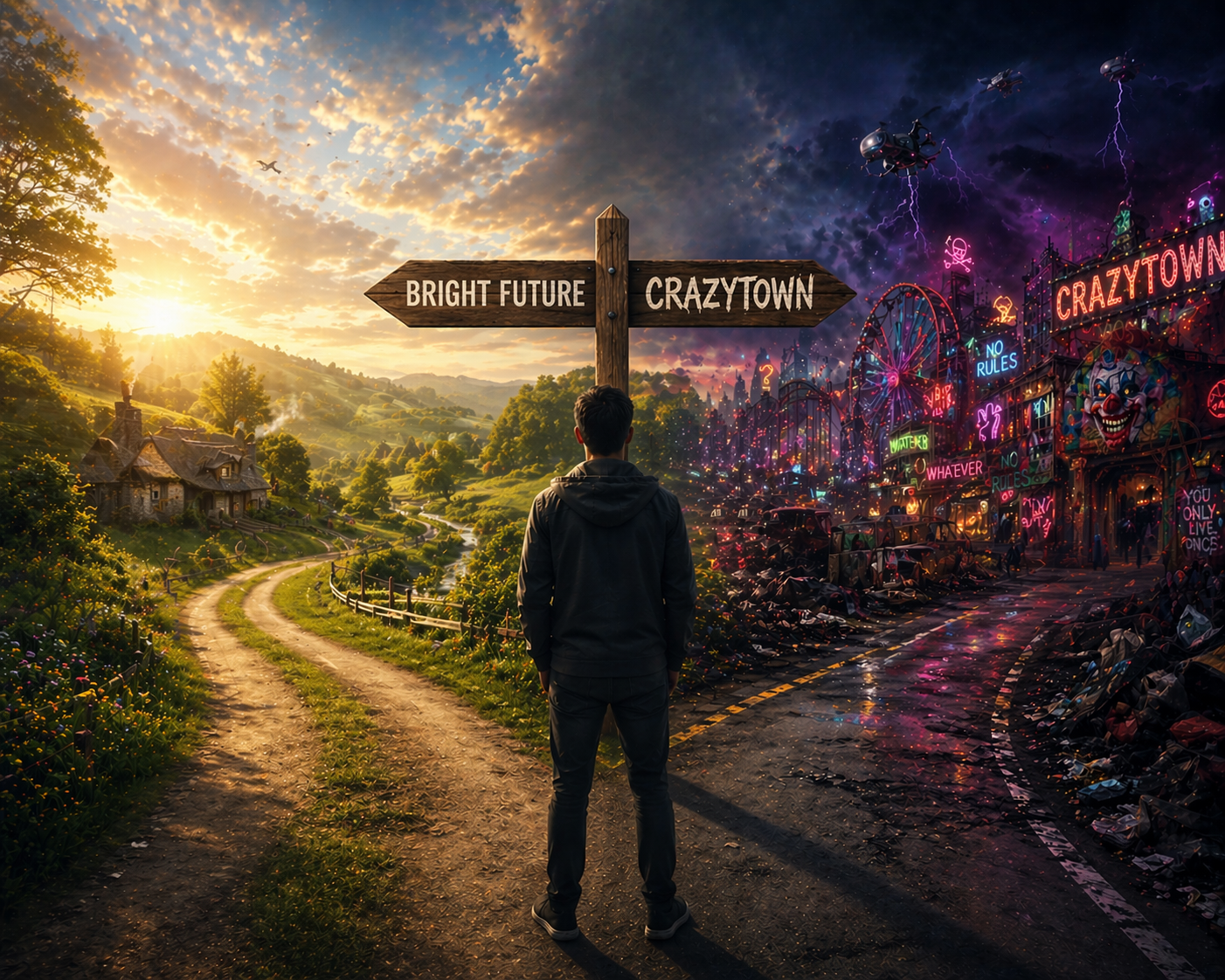
Over the past decade or so, I’ve seen a lot of people go from what appeared to be a nice, stable life to a pretty crazy, chaotic, directionless existence pretty quickly. It usually started with quitting things. Quitting isn’t bad in and of itself but when you quit one thing, invariably the time and energy you spent on that thing is taken up by something else and then the question is whether that new thing is better (long-term) than the thing you quit. Trying to determine what will be better long-term can be a little tricky as it involves looking into the future. Many things can seem better in the short-term. For example, like a lot of people, I hate commitments and deadlines. Even the word DEADline sounds pretty ominous and the word “committed” is used when people are forced into institutions/prison. I HATE the idea of commitments and deadlines and no mental gymnastics can make me like them. I want to do whatever I want, whenever I want so that would seem to be best for me in the short term. However, I realize that practically all the best parts of my life have involved commitments and deadlines. School, tests, jobs, clients, marriage, kids, travel, friends, family, community, church, sports leagues, and even lots of entertainment requires planning, commitments and deadlines. The only alternative is to basically lay around and do nothing or to be wealthy enough to be perfectly spontaneous all the time while almost no one else can, which means doing your spontaneous activities alone more than likely. A lot of modern messaging seems to be pushing the idea of the “lone wolf” being ideal. If you don’t need anyone, you are stronger or superior somehow. This is kind of hilarious because never in human history have people been more dependent on each other. Most people would literally die within days or weeks if they couldn’t rely on millions of others for food, water, utilities, fuel, clothes, housing and even basic maintenance. Many modern adults are about as self-reliant as infants while claiming to be “fiercely independent”. Vanishingly few people are truly independent. That’s why millions love watching wilderness survival shows. The way that some people lived for centuries is so incredibly rare now, that it makes compelling entertainment. Interestingly, even in these shows, people are often completely isolated. This would not be the default though. Most people naturally do NOT choose to be “fiercely independent”. If they did, all that we see now would not exist. Humans and even a lot of animals, naturally group into some sort of group/family/tribe/village and develop some sort of social structure including roles. This is not an inherent weakness. It is obviously a strength. Individuals take on roles and responsibilities because it is in their own best interest while also being in the best interest of the group. In business and modern society at large, it is pretty widely accepted that one of the greatest ideas in all history was not the smartphone, internet, car, plane or even the wheel… it was the division/specialization of labor. Essentially, people committing to perform small, simple tasks on deadlines as part of a larger plan allowed the greatest evolution in society and well-being EVER.
So how do we know if quitting something, and replacing it with something else will be better long-term? I am terrible at golf, but I’ll never forget a simple lesson from a golf instructor. He asked if you could choose when to putt, would you want to go first or last? Answers were all over the place, but he said if you go last, you get to go to school for free. Any other putts will help reveal the true lie of the green and may help predict your putt. He told us that if you’re not watching closely while others putt, you’re a fool. We each probably know hundreds of people and we can observe their decisions and results in real-time, but we can also look into history where millions of decisions and results have been documented. We can have the benefit of hindsight which is a whole lot like foresight when it comes to human behavior. We can see which metaphorical putts sink and which never have. This requires a bit of study and a bit of judgment.
Interestingly, popular messaging tells us that judging is the worst possible sin anyone can make, as they simultaneously pass that harsh judgement upon anyone who judges. Popular messaging also encourages people to prioritize their mental health above all else. There is often a grain of truth in everything. Prioritizing mental health is a worthy goal. Not being overly judgmental is also a worthy goal. However, good judgement is not bad. It is vitally essential. You must exercise good judgement of what your body consumes or you will get poisoned. You must also exercise good judgement in what your mind consumes and the choices you make or your mind and life will be poisoned. While everyone can tolerate different levels of poison, the optimal level is probably zero. Sometimes all that separates poison from medicine/food is the dose. Again, we can look to history for appropriate dosage. The dosage for judgement should probably be pretty low. We usually don’t need to pronounce judgements on others, but we absolutely need to evaluate their decisions and consequences if we want to “go to school for free” and not blindly putt away through life. Nothing in life is perfect and people and even animals like to think things could be better. Every day I drive by a field where horses reach over the fence to eat the weeds on the other side by the road that look worse to me than the field they’re in. Whenever I see someone quit their beliefs, marriage, friends etc. I often see the results. It often looks like they’ve traded a lush field for weeds by the side of the road. On the other hand, sometimes there does appear to be a big improvement in their life. Once again, it all depends on what was quit and what it was replaced with. Observing the results of others in the present and throughout history is a valuable insight that, like my golf instructor said, only fools ignore. Everyone has to make their own decisions, but based on what I’ve observed, I’m not quitting anything big in my life.
